Introduction
Part: The Roots and Growth of the Second Wave Feminist Battle Against Gender Discrimination
Feminist Organizing Across the Generations traces the evolution of a social movement over time and argues that strong internal structure is necessary for the success of such movements. Part I, “Building the Feminist Movement,” analyzes the challenge to gender discrimination embedded in all major social institutions, a story unfolding in similar ways across the country, and focuses on a case study, the history of the Philadelphia chapter of the National Organization for Women (NOW). Although this study covers a time period extending from 1966 to 2021 and explores a range of philosophies and organizational models, it largely centers on one city, connecting what took place in Philadelphia with what was occurring nationally.
In most major cities in the late 1960s, the local NOW chapter was the major engine of institutional change. Like most NOW chapters, the history of Philadelphia NOW is very much intertwined with that of NOW’s national and state organizations and its history thus has a larger dimension. On the national level NOW has been well documented; however, many of the local stories have yet to be told. This study examines both the national and local levels of NOW in the context of a powerful social movement, and analyzes NOW’s relationships with other mainstream feminist organizations, such as the National Women’s Political Caucus and its local affiliate, and with what was considered the more radical Women’s Liberation movement
.
Although NOW may have been the focal point, it was certainly not the only locus of feminist activity in the late 1960s and 1970s. NOW activists were primarily focused on changing the rules governing society and opening up opportunities in government, business, and traditionally male occupations to women. Some, like Philadelphia NOW founding member and psychologist Jean Ferson, were also involved in the consciousness-raising movement, the feminist therapy movement, and the emerging women’s health movement. Other feminists focused on creating feminist free spaces—book stores, clubs, music festivals—rather than building feminist organizations. Some feminists did not belong to explicitly feminist organizations like NOW but worked tirelessly for gender justice in their unions, professional associations, educational institutions, and religious organizations. Some wanted nothing less than total revolution and were impatient with and often contemptuous of those trying to reform existing social institutions. The energy and creativity were astonishing. The changes in the status of women in the past half-century have been enormous and have become so much a part of the air we breathe that we no longer perceive the extent of the change.
The feminist movement, which emerged in the mid-1960s, may in retrospect appear inevitable, but this was not the case at the time. It was a revolution that virtually no one saw coming. Ruth Rosen begins her history of second-wave feminism with a 1967 quote from Harvard sociologist David Riesman: “If anything remains more or less unchanged, it will be the role of women.”1 Even many of the second-wave pioneers of the early and mid-1960s did not expect dramatic changes in gender roles. Civil rights workers Casey Hayden and Mary King’s influential 1965 memo, “Sex and Caste,” based on their experiences in the Student Non-Violent Coordinating Committee (SNCC), concluded on a pessimistic note: “Objectively the chances seem nil that we could start a movement based on anything as distant to general American thought as a sex-caste system.”2 When political scientist Jo Freeman in 1966 applied to the Institute of Policy Studies to learn about political organizing, she told the directors she wanted to organize women. The response: “There’s no future in that.”3
Although initially the second-wave feminist movement seemed to come out of nowhere, many of the leaders had considerable experience in building and maintaining organizations. The feminist movement that took so many by surprise is well documented on the national level and a rough consensus has emerged on the main contours of the national movement. Most historians of second-wave feminism define it in terms of two strands often characterized as the earlier, liberal reformist strand associated with hierarchical, structured organizations like NOW, and the somewhat later, generally considered more radical, “women’s liberation” strand consisting of small, loosely organized non-hierarchical collectives.
The first strand emerged in the 1960s, assisted by the networks formed by the Kennedy Commission on the Status of Women. Impatience with the slow pace of change, in particular the failure of the Equal Employment Opportunity Commission (EEOC) to take sex discrimination seriously, led to the formation of NOW in 1966, with the charismatic leader Betty Friedan as its first president. Friedan did not initially envision NOW as a mass movement.4 However, her original conception quickly evolved as women around the country expressed interest in forming local chapters.
Friedan’s The Feminine Mystique, published in 1963, resonated with millions of American women. In her study of the response to Friedan’s book, sociologist Stephanie Coontz documents a world of institutionalized gender discrimination persisting well into the early 1970s. Among the more egregious examples cited by Coontz: in 1965 only four states allowed a married woman the right to a legal residence separate from her husband’s. When a woman lived apart from her husband, she was usually unable to buy or rent a home on her own. Coontz reported that as late as 1972, a woman “could not rent an apartment until her husband, a patient in a mental hospital, signed the lease.”5 Sometimes discrimination was a matter of custom; sometimes it was a matter of statute. There was considerable variation from state to state, certainly contributing to the support for an Equal Rights Amendment which would wipe out all such statutes in one fell swoop.
Conditions were ripe for major change. Increasing numbers of women were in the labor force, had access to higher education, and were less likely to acquiesce to discriminatory practices. Only a relatively small number joined NOW, but many more were rethinking choices in their individual lives. Also, the civil rights movement had a profound impact on the entire society. The connection between the nascent feminist movement and the civil rights movement has usually been made with reference to the young women radicalized by their experiences in the civil rights movement. But the influence extended far beyond those few actively involved. Of course, not every woman beginning to challenge gender hierarchy likened the struggle against sexism to the civil rights movement, but the pervasive sense that all established institutions were being challenged and that a new world was in the making surely had an impact.
The Women’s Liberation strand of the feminist movement emerged in part from the women involved in the civil rights movement and in part from a somewhat younger cohort involved in the anti-war movement and the New Left organizations of the late 1960s. Although the women drawn to NOW were generally somewhat older than the women drawn to the Women’s Liberation movement, there were some notable exceptions. Gloria Steinem, for example, reports that though closer in age to the women in NOW, she was “drawn to the more radical and younger ones.”6 Although an over-simplification, the two strands have also been seen as structured vs. structureless organizations. The diffuse Women’s Liberation movement, which largely disappeared from the scene by the late 1970s, may have had a more radical vision than what was viewed as the liberal strand of the movement associated with NOW, but its impact on institutions was far less apparent and more difficult to measure.
The impact of liberal feminism associated with NOW is certainly easier to gauge. With a structure that enabled it to operate effectively on all three levels of government, NOW had a string of major legislative victories that transformed our society. Many NOW members saw themselves as the real radicals, using mainstream tactics to achieve radical ends. At a time when the term “liberal” is associated in the minds of many with the far left, and polling organizations frequently list “liberal” as the leftmost choice when asking for political allegiance, it may come as a surprise that in the late sixties “liberal” was often used contemptuously to describe a timid upholder of the status quo. In the 1970s historians tended to describe feminism in terms of three strands—liberal, radical, and socialist feminism. However, a movement as large and diverse as the feminist movement could never be reduced to a tidy, clear-cut taxonomy; these are contested terms, with evolving meanings. By the 1980s, references to socialist feminism tended to disappear, at least among American feminists, and the difference between liberal and radical feminism became increasingly difficult to disentangle.
The prevailing narrative, which sees liberal feminism supplanted by a more vibrant radical feminism associated with the Women’s Liberation’s movement, has not gone unchallenged. In 1975 political scientist Jo Freeman argued: “Some groups called ‘reformist’ have a platform that would so completely change our society it would be unrecognizable.”7 Sociologist Barbara Ryan noted that interviews she conducted in the late 1980s “show that feminists from a wide range of groups consider their goals to be radical—not because they were getting arrested by the hundreds, but because they believe they are attempting to achieve social relations that are radically different than what we have known in the past.”8 More recently, historian Stephanie Gilmore has also challenged the sharp distinctions between liberal and radical feminism.9
Histories drawing upon the documents of the time often perpetuate the conception of the “liberal” National Organization for Women (NOW) as the right wing of the women’s movement. National histories have tended to emphasize the widely publicized actions of the radical Women’s Liberation strand associated with groups like New York’s Redstockings, and often give the impression that this strand involved large numbers and was numerically a force equal to what was sometimes disparagingly referred to as the “liberal” reform strand associated with NOW. NOW kept membership records; the decentralized Women’s Liberation movement for the most part did not, making comparisons quite difficult. There was no hard and clear division between these two strands, and during the 1970s, NOW was influenced by the values and tactics of the Women’s Liberation movement. Towards the end of the 1970s, the Women’s Liberation movement faded from the scene. However, some of the feminist service organizations that grew out of small Women’s Liberation collectives endured for decades. Also, many of the values and approaches to organizing associated with Women’s Liberation were to resurface in the 21st century. By the end of the 1970s, the two strands of the women’s movement, radical and liberal, essentially merged within NOW, in some places the only feminist organization left standing.
The “second wave” feminist movement, which emerged in the United States in the late 1960s, was far more diverse, both ethnically and regionally, than is generally acknowledged. The term “second wave,” intended to distinguish the feminist movement of the 1960s and 1970s from the first wave, the 19th-century suffrage movement, has been challenged by feminist scholars who view the wave metaphor as a simplistic schema that ignores the continuities between “waves” and fails to acknowledge feminist activism between waves.10 Furthermore, according to historian Kimberly Springer, the wave metaphor has followed the trajectory of white women’s feminism and de-emphasized the feminist activism of women of color, an activist tradition not fitting so neatly into the wave schema.11 This of course is the historian’s dilemma: while some periodization is necessary to describe broad historical trends, the categories are always imprecise, the boundary lines fluid.
Some feminist theorists have tried to continue the wave metaphor, applying it to a “third wave” used to describe some strands of 1990s feminism emphasizing diversity and intersectionality. Although the term “second wave” has some utility as it is generally clear what it signifies, this is not the case with the term “third wave.” Used sometimes as a generational marker to describe feminists coming of age in the 1990s and at other times to describe a feminist philosophy grounded in intersectionality, the “third wave” was for the most part a cultural phenomenon, living largely online. No strong organizations capable of mounting a serious challenge to social institutions emerged from third-wave feminism. The term “fourth wave” is occasionally used to describe 21st-century feminism, but its meaning is even less well defined than that of “third wave” feminism, with the wave metaphor used less frequently by feminist theorists and historians.
One of the best analyses of the wave metaphor, which captures both its weakness and its usefulness, is that developed Leila J. Rupp and Verta Taylor:
The wave metaphor … may have more utility than we thought, as long as we understand that the lulls between the waves are still moving, that, from a transnational perspective, there may be choppy seas rather than even swells, and that waves do not rise and crash independently of each other.12
More recently, Annelise Orleck has challenged the wave theory, arguing that “the movement has been ceaseless. There have been bigger and smaller waves. But, as in the ocean, the waves have kept on coming.”13 Orleck cautions against underestimating advances made during what she calls “the trough years” of the 1920s, 1930s, and 1940s when trade union feminists waged battles for pay equity and better working conditions, paving the way for the major changes in women’s status associated with second-wave feminism.14
Whatever we ultimately call the explosion of feminist activism which occurred from the late 1960s through the late 1970s, momentous changes in gender roles were happening, albeit unevenly, all over America. Most of the published material documenting the second-wave feminist movement focuses on a few major urban centers—New York City, Boston, Chicago, San Francisco, and Los Angeles.15 These national narratives tend to be based on the same sources and often rely on the same anecdotes. Historians of the feminist movement have begun to complicate the story of second-wave feminism, which has often been viewed as largely white, middle class, and centered in a few major urban areas. More recent studies have focused on the role of working-class women and women of color16 and also on geographical locations outside the epicenters of second-wave feminism.17
Many feminists’ conception of the movement has expanded to include grassroots women who did not identify as feminists but whose activism is clearly part of the feminist project.18 Also, there were many feminist initiatives (e.g., feminist bookstores, coffee shops, music festivals, lesbian bars) organized by small groups of women independent of any feminist organization and usually not included in the grand narratives of second-wave feminism.19 Recently, much original research (rather than analysis and critique of existing narratives) has been found in regional and local histories. Scholars are just beginning to document the regional diversity of what Rosalyn Baxandall and Linda Gordon have called “the largest social movement in the history of the U.S.”20 These local histories will at some point be woven into a richer, more nuanced tapestry of “second wave” feminism.
Social movement historians usually consider NOW the major social movement organization of “second wave” feminism. Although many other feminist organizations were active in the 1970s, there were none with the influence and staying power of NOW. Toni Carabillo in the Feminist Chronicles, 1953–1993 saw the National Organization for Women (NOW)
justifiably as the organizing focal point of the movement … . Though Women’s Liberation groups emerged and flourished across the country for a few passionate years, they lacked national coordination, goals, an accepted leadership, and, not the least, an effective fundraising mechanism. Other organizations nurtured the movement … . But NOW has remained central to its existence and vitality.21
What accounts for the staying power of NOW? Why was NOW in many places the only multi-issue feminist organization remaining in the early 1980s? As I delved into the archival material, I was struck by the degree to which the founding members of NOW thought deeply about structure. NOW’s emphasis on building a federated structure operating on all levels of government enabled the organization to function effectively in the political arena and was certainly a major factor in the legislative victories of the 1970s, as well as in its long-term survival. NOW shared credit with many other feminist organizations (as well as a loose network of feminist bookstores, coffee houses, and consciousness-raising groups) for the dramatic changes in hearts and minds, but NOW was the main engine behind victories in state and national legislatures and in the courts.
Unlike the loosely organized, evanescent Women’s Liberation groups, which formed in the early 1970s, local NOW chapters were to varying degrees connected to both the national and state organizations. The national organization owed much of its political clout to its local networks of grassroots activists, and local chapters benefitted from the resources of the national organization. This was especially the case with Philadelphia NOW because of its geographical proximity to the national NOW office and the personal relationships between Philadelphia activists and national and state leaders.
The founding members of Pennsylvania NOW—in particular, Eleanor Smeal and Beverly Jones—paid very close attention to structural issues, with Jones writing an influential rationale for creating a highly structured organization with both state and local affiliates.22 (See chapter 2.) Philadelphia NOW maintained a close relationship with Smeal during her presidency of Pennsylvania NOW and later of national NOW, and was clearly influenced by her attention to structural issues. The history of Philadelphia NOW illustrates how the interrelationships between local, state, and national levels of NOW worked in practice when there was trust and cooperation among the leadership on all three levels of the organization.
The basic unit of NOW, the local chapter, turned out to be very useful in accommodating the variation in the style and priorities of NOW members. The initial impulse for the founding of NOW chapters varied from region to region, although certain issues such as the ERA were priorities for virtually all chapters; however, as long as chapters were not acting in contradiction to NOW’s positions, they were free to choose their priorities from among the many issues NOW addressed. For example, Stephanie Gilmore documents how West Coast NOW chapters took up the cause of prostitutes’ rights, an issue not on the agenda for NOW activists in Philadelphia.23 In the pre-internet age most feminists identified primarily with their local organization; this was certainly the case with local NOW chapters. Only those who had friends and colleagues among the national leadership or aspired to it themselves closely followed the affairs of national NOW. Thanks to the internet, both the achievements of national organizations and the conflicts among feminists on the national level are now widely known and amplified by social media. Twenty-first-century feminists frequently see themselves as part of a national or international movement and can easily keep up with the struggles of feminists around the globe.
There was little evidence of such international awareness among Philadelphia NOW’s founding members in the 1960s. The initial direction of the Philadelphia NOW chapter was influenced by the skills and interests of its founding mothers Ernesta Ballard, Jean Ferson, and Jan Welch. (See chapter 1.) Ballard in particular brought her considerable experience in non-profit organizations to the task of founding Philadelphia NOW. These founding members focused primarily on expanding career opportunities for women, consistent with the focus of National NOW in the late 1960s. As the movement grew, it included more and more women who were not political activists and who were primarily interested in how traditional gender roles affected their personal lives. Philadelphia NOW’s second president, Jean Ferson, a psychologist, shared that interest and, unlike some NOW activists, was receptive to the growing consciousness-raising movement. Ferson’s embrace of consciousness-raising contributed significantly to the growth of the chapter.
Political and Racial Tensions Within NOW
In addition to accommodating the diverse priorities of NOW members around the country, the chapter model also served as a safety valve for defusing political and personal conflicts and as a vehicle for surviving the increasingly bitter divisions which threatened to tear apart national NOW and also endangered some local chapters. In the mid-to late 1970s, the Socialist Workers’ Party (SWP) attempted to infiltrate NOW on the national and local levels. (See chapter 2.) The situation in Philadelphia was complicated by personal tensions; it appears that one faction may have been using the SWP presence as an excuse to split the chapter. As national NOW allowed the formation of a new chapter with only ten dues-paying members, the ease with which a dissident group could simply form a new chapter defused tension while keeping everyone under the big tent of NOW.
The chapter model also functioned as a vehicle for defusing racial conflicts. (See chapter 3.) National and Pennsylvania NOW newsletters in the late 1970s and early1980s reflect a growing emphasis on issues of race and class. As a result of Pennsylvania NOW’s commitment to eliminating racism, a new chapter, Germantown NOW, was formed in Philadelphia to fight for racial and gender justice. The core Philadelphia chapter remained focused on passage of the Equal Rights Amendment; Philadelphia NOW members who were interested in addressing racial justice issues joined Germantown NOW. These breakaway chapters raise questions about the wisdom of allowing small groups with priorities different from the core chapter’s to go their own way. Such chapters could be viewed as strengthening the organization by enabling members to focus on their priorities while keeping everyone within the big tent of NOW. They could also be viewed as a way of avoiding difficult conversations the organization needed to have.
Unfortunately, there is more than a grain of truth in the widely held view that NOW was primarily a white women’s organization. National NOW tried very hard to counter this perception, and because national leaders had contacts with women involved in the civil rights and labor movements, they had some success in recruiting women of color for national leadership positions. This was much more of a challenge for local chapters. Philadelphia, for example, was a segregated city in the 1960s and 1970s; it is not surprising that the local NOW chapters reflected this. NOW chapters expanded through the social networks of the founders, and as they acknowledged, those networks were largely white and middle class.
In the 1970s, women of color were organizing to improve women’s lives, but generally not under an explicitly feminist banner. Many were involved in civil rights organizations and in the movement for Black political empowerment; others were involved in grassroots neighborhood organizations. The African-American community activists from Philadelphia described in Nancy Naples’ Grassroots Warriors: Activist Mothering, Community Work and the War on Poverty did not generally identify as feminists and their activism has usually not been considered part of the feminist project.24
Susan Hartmann, in The Other Feminists: Activists in the Liberal Establishment, documents the work of African-American feminists who “found the ACLU, the NCC [National Council of Churches], and the Ford Foundation more convenient or more congenial places than mainstream feminist groups to pursue feminist aspirations.”25 Once these women’s experiences are fully integrated into the history of second-wave feminism, a far richer narrative will emerge. The feminist movement is much broader than those organizations with an explicitly feminist agenda.
From the very beginning, NOW was a political player, engaged in lobbying and letter-writing campaigns to legislators; however, in the early years, many NOW members were deeply suspicious of direct involvement in electoral politics. In the early and mid-1970s, Philadelphia NOW dealt with this distrust by farming out electoral politics to the Philadelphia Women’s Political Caucus (PWPC), formed in 1971. Philadelphia NOW members were instrumental in the formation of PWPC but wanted to keep NOW itself unsullied by the messy compromises of partisan politics. Distrust of electoral politics was not confined to NOW members but was pervasive among progressive movements in the late 1960s and 1970s.
NOW’s attitudes towards participation in electoral politics evolved as the decade wore on; the battle for passage of the Equal Rights Amendment and the struggle to protect abortion rights underscored the need for electing feminist legislators. (See chapter 4.) With the election of Ronald Reagan in 1980 the tide had turned in favor of the right; the final years of the struggle for ERA ratification were fought in the shadow of the Reagan victory. The ERA campaign itself became a training ground in the basics of the political process and many NOW members considered running for office. NOW had built a structure capable of effectively channeling the energy of its members and facilitating their entrance into the political arena as candidates, campaign managers, and volunteers, although the major prize, the ERA, eluded them. Unfortunately, the lack of racial diversity, the glaring weakness of NOW and the feminist movement as a whole, was not seriously addressed and remains a source of tension to this day. The heady social movement phase of second-wave feminism had come to an end, but organized feminism, particularly the feminist service organizations, in some cases grew stronger than ever.
Part II: The Feminist Service Organizations
The second-wave feminist movement is generally thought of as the political struggle to end gender discrimination in societal institutions and to dismantle deeply ingrained beliefs about gender roles, thus transforming both public and private life. The struggle to build feminist service organizations has received far less attention, despite the impact of these alternative organizations in providing much needed services and their influence on existing institutions. (See chapters 5, 6, 7.) The resources available for building feminist service organizations were for the most part available only in urban areas, hence their concentration in large cities. Although such organizations were forming in major cities across the country, they were particularly well developed and long-lasting in Philadelphia; some feminist service providers have attributed the city’s robust tradition of supporting non-profit organizations to the influence of the Quaker tradition. Obtaining funding for feminist service organizations was a major victory for the feminist movement, with these organizations securing grants from religious organizations (and their affiliated foundations) and government agencies, as well as significant donations from corporations and individuals.
Initially there was some resistance to the idea of professionally run feminist service organizations. While acknowledging that these organizations provided essential services, some feminists saw them as a mixed blessing. According to NOW member Judy Foley:
I think professional service delivery women’s organizations [were] the death of volunteer organizations. The professional organizations took a lot of the steam out of volunteer organizations because [feminists] said well somebody’s doing it now; it was a victory in a sense but the political battles were still there to be fought.26
Foley saw the service organizations as playing a role in depoliticizing the feminist movement. Incorporated as 501c3 charitable organizations, these agencies were restricted in their ability to engage in political advocacy. Also, as 501c3s, which could accept tax-deductible charitable contributions, they were a more attractive option for many feminist donors than were advocacy organizations such as NOW. Granted, the 501c3 funding came with strings attached and the radical edge of some of these organizations was blunted, but more women were receiving services and the women who had been providing them for free could now get jobs as service providers. However, Foley’s prediction of the impact of feminist service organizations on volunteer advocacy groups such as NOW was not experienced immediately; both nationally and locally NOW continued to grow through 1970s.
Historians of second-wave feminism have generally paid relatively little attention to feminist service organizations, for the most part charting the political dimension of the movement. However, the women who founded feminist service organizations were deeply influenced by the values of second-wave feminism, in particular the collectivist values associated with the Women’s Liberation strand of the movement. However, just as it is difficult to completely disentangle the liberal reform strand of second-wave feminism from what was considered the more radical Women’s Liberation movement, it is difficult to clearly separate the political movement against sex discrimination from the movement to build feminist service organizations. There were activists who pursued both paths, and the broad support for the feminist movement encompassed both.
Many activists began with little experience in service provision, but quickly learned what they needed to know; many of the organizations they built lasted for decades, with some still in existence in the 21st century. Those service organizations that survived were forced to adapt to the requirements of funders. A recurrent theme in my interviews with the founders of feminist service organizations was the ongoing tension between the feminist values of collective decision-making and non-hierarchal structures and the increasingly top-down decision-making and bureaucratic structures which were the inevitable consequences of growth. Funders demanded a governing board and staff hierarchy. In response, “feminists began to work more institutionally,” moving away from mass membership groups to organizations run by a board and staff.27 The great strength of second-wave feminism was in the range and diversity of its organizations and approaches. I have been struck by how many of the second-wave feminist activists I have interviewed were visionary leaders who were also were very skilled in the nuts and bolts of organization building. They were determined to build organizations that both provided services and advocated for social change, and they knew how to build for the long haul.
As the movement grew in the 1970s, both activist groups such as NOW and feminist service providers increasingly grappled with racial differences among women—a particularly urgent issue for the rape crisis and battered women’s movement. In the 1970s the majority of the leaders of the battered women’s movement were middle-class white women; many of the women their organizations served were likely to be low-income women and women of color, whose experiences with the criminal justice system were generally very different from those of middle-class white women. The racial blind spots of many feminist service organizations led to the formation of service organizations specifically focused on the needs of African-American women –for example, the National Black Women’s Health Project and its network of local affiliates.
In the 1970s women’s health organizations began to spring up around the country, founded to empower women to take control of their own healthcare. Many of the feminist health clinics founded in the 1970s did not survive the funding cuts of the Reagan years. In addition to the economic pressures, in the 1980s feminist clinics providing abortions were subject to violent attacks and harassment by the right-wing anti-abortion forces. Frequently, the organizations that survived were forced to change their organizational structure in order to meet funders’ requirements.
Some of those organizations, like the Philadelphia Black Women’s Health Project, that did not continue into the 21st century regrouped into similar organizations. Other disbanded organizations lived on in the influence they had on major social institutions; the Elizabeth Blackwell Health Care Center may not have survived, but its impact on mainstream healthcare did. As the years wore on and political climate became less hospitable to demands for radical change, the social service mission of the surviving agencies often became far more important than the social change agenda. This shift entailed a tendency to see problems rooted in individual behavior rather than structural impediments. As the 20th century drew to a close, many of those involved in feminist healthcare organizations came to recognize the limits of providing alternatives to powerful institutions and questioned whether alternative organizations alone could force existing institutions to undergo fundamental transformations. However, fundamental changes in the delivery and funding of health care were not among the politically possible options until the Medicare for All movement of the 21st century.
Fundraising was a never-ending challenge for feminist organizations, particularly feminist service organizations. (See chapter 8.) Unlike advocacy organizations, which could exist with very limited funds, service organizations could not function without staff and the funding necessary to provide high-quality services. In 1977, a group of women with experience in Philadelphia’s local non-profit/philanthropic community formed Women’s Way, a coalition of seven women-centered non-profits, to participate in a collective fundraising effort. Grassroots feminists were wary of Women’s Way’s relationship with the corporate world and with the elite credentials and connections of some of Women’s Way’s leaders. Yet increased funding for essential services for women and children was urgently needed, and, despite the reservations of some grassroots feminists, support for Women’s Way continued to grow.
Women’s Way was initially successful as a fund-raising coalition but also as a source of support and encouragement for leaders of the feminist non-profit community. However, the original Women’s Way model was not sustainable. Like the other survivors among the feminist service organizations founded in the 1970s, Women’s Way adapted to a changing landscape and assumed a new role as “convener,” bringing all stakeholders together, including people with “lived experience.”28 It no longer tries to provide significant funding for a small number of organizations, but rather provides smaller amounts to a larger and more diverse range of organizations.
Part III: Mapping the Landscape of 21st-Century Feminism
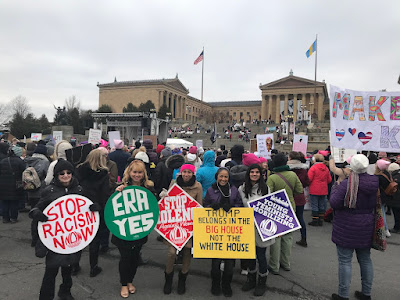
Part III of Feminist Organizing Across the Generations shifts from the achievements of second-wave feminism, which can be viewed from the perspective of some distance, to the much greater challenge of documenting and analyzing 21st-century feminism, a landscape which is changing as I write. This study focuses on two periods in which feminist activism was unfolding within the context of a social movement—second-wave feminism and the 21st-century upsurge in social activism, much of which is led by young feminists. Although feminist organizing continued after the heyday of second-wave feminism, references to the “women’s movement” gradually disappeared. What continued were references to more focused, issue-specific movements—e.g., the abortion rights movement, the equal pay movement, and the anti-violence movement. It wasn’t until the 2017 Women’s March that references to a unitary Women’s Movement reappeared.
In response to the election of Donald Trump, the 2017 Women’s March, which began as a Facebook post, coalesced almost overnight, demonstrating the power of social media-driven campaigns to rapidly mobilize millions of people, but also demonstrating their limitations. (See chapter 9.) However, when conflicts arise, there are no agreed-upon mechanisms for resolving tensions and for holding leadership accountable. Although a non-profit Women’s March Inc. emerged from the initial march, it was not a membership organization with members empowered to set the agenda, elect board members and officers, and develop procedures for holding leaders accountable.
As Zeynep Tufekci has noted in her study of internet-driven protest movements, Twitter and Tear Gas, without an organizational structure that allows for democratic decision-making, mass mobilizations can lead to a “tactical freeze,” with movements unable to agree on a path forward.29 Such an impasse occurred when long-smoldering conflicts in the newly incorporated Women’s March Inc. broke out into the open in 2018, when two of the group’s co-chairs were prominent attendees at an event sponsored by Nation of Islam leader Louis Farrakhan, a notorious anti-Semite. Dissatisfaction with the co-chairs’ leadership led to calls for their resignation; however, the calls went unheeded. Women’s March Inc. was initially seen as an outpouring of female solidarity, but by 2019 was more likely to be to be viewed as a group splintering along lines of race, class, and political philosophy.
I began this study with an appreciation of the powerful tools available to 21st-century feminists but also an awareness of the limits of internet mobilization and the necessity of building durable social movement organizations to achieve fundamental social change. I also began with the assumption that although second-wave feminists excelled as organization builders, this was much less the case with 21st-century feminists, an assumption I have since learned is incorrect. Twenty-first-century feminists are not building explicitly feminist organizations along the lines of the National Organization for Women and for the most part have expressed little interest in joining NOW. However, they are building multi-issue progressive organizations, and bringing a gender justice perspective to these groups. Some are building groups with a federated structure along the lines of NOW; others are creating more fluid, internet-driven forms of feminist organizing, without hierarchical structures and elected leadership. What they have in common is a deep commitment to intersectionality, something largely lacking in second-wave feminism.
Although many young women were drawn to the Women’s March, established feminist organizations such as NOW have struggled to attract young women. (See chapter 10.) Also, although many second-wave feminists saw NOW’s federated structure as a significant advantage, some younger feminists see it as a stifling bureaucracy. Some young feminists are seeking to create new internet-driven organizations and have returned to the core ideas of the Women’s Liberation strand of second-wave feminism: horizontal structure, decision-making by consensus, and no formal leadership. The distrust of leadership is found in a range of 21st-century social justice movements such as Black Lives Matter, sometimes described by their members as “leaderfull” movements with no need of hierarchy. In contrast, NOW has historically made decisions by majority vote and elected leaders who were accountable to the membership. However, the younger NOW members I interviewed questioned the extent of NOW’s commitment to internal democracy, noting many procedural barriers to participation. The most frequently heard criticism is the reluctance of NOW’s old guard to move aside for a younger generation of feminist leaders. NOW’s failure to pass the torch is also bound up with its failure to build a racially, ethnically diverse leadership team, with generational tensions intertwined with race/class tensions.
Although relatively few young feminists are gravitating to NOW, many are forging new paths towards advancing a feminist agenda. (See chapter 11.) In some cases, they are rejecting formal organizations altogether. In her study of the mass protest movements collectively known as the Resistance, which swept the country in the wake of Donald Trump’s election, Dana Fisher reported that when her research team asked participants at each of the protest marches if they were affiliated with any of the organizations sponsoring the event, most reported “neither hearing about the event from a group nor traveling to the event with a group.”30 Although some young feminists are rejecting formal organizations, others are choosing to build organizations not explicitly feminist, such as Black Lives Matter or Sunrise. They are playing leadership roles (even when they deny they are leaders) in a range of social justice organizations and are bringing a feminist perspective to these groups. Much feminist organizing now occurs within progressive rather than explicitly feminist organizations.
Prior to the election of Donald Trump, many of the newer organizations, such as Occupy, were not involved in, and did not encourage their members to become involved in electoral politics. However, Trump’s election resulted in a shift towards political participation with the rise of groups such as Indivisible. Increasingly, younger women interested in political activism are drawn to socialist politics rather than to the liberal reform politics generally associated with Indivisible. For example, Reclaim Philadelphia, which grew out of the Bernie Sanders 2016 campaign, is led by young feminists who bring to socialist politics what they characterize as “a deep understanding of the intersectionality of feminism.” Reclaim places a greater emphasis on gender justice issues than has historically been the case for a socialist organization. It played a leading role in the 2020 International Women’s Day rally and March for a “feminism that is socialist and a socialism that is feminist,” and has an active gender justice task force committed to advocacy for transgender rights. Although socialist feminists were involved in the second wave feminist movement of the 1970s, their numbers were few and the larger society was generally antagonistic to socialism. Socialist feminists in the 21st century are finding a far more receptive audience. Furthermore, 21st-century feminists increasingly have an international perspective, with many US feminists now thinking of themselves as a part of a growing worldwide movement for gender, racial, and economic justice, and with young women leading protest movements around the globe.
Notes
Unless otherwise indicated, all unpublished Philadelphia NOW archival material is housed at Temple University Urban Archives.
1 David Riesman quoted in Ruth Rosen, The World Split Open: How the Modern Women’s Movement Changed America (New York: Viking, 2000), vii.
2 Casey Hayden and Mary King, “Sex and Caste,” in Sara Evans, The Roots of Women’s Liberation in the Civil Rights Movement and the New Left (New York: Vintage Books, 1980), 237.
3 Jo Freeman, “On the Origins of the Women’s Liberation Movement from a Strictly Personal Perspective,” in The Feminist Memoir Project: Voices from Women’s Liberation, ed. Rachel DuPlessis and Ann Snitow (New York: Three Rivers Press, 1998), 171–196.
4 Susan Brownmiller, In Our Time: Memoir of a Revolution (New York: Random House, 1999), 3.
5 Stephanie Coontz, A Strange Stirring: The Feminine Mystique and American Women at the Dawn of the 1960s (New York: Basic Books, 2011), 6.
6 Gloria Steinem, My Life on the Road (New York: Random House, 2016), 48.
7 See Jo Freeman, The Politics of Women’s Liberation (New York: Longman, 1975), 51.
8 Barbara Ryan, Feminism and the Women’s Movement: Dynamics of Change in Social Movement Ideology and Activism (New York: Routledge, 1992), 161.
9 Stephanie Gilmore, “The Dynamics of Second-Wave Feminist Activism in Memphis, 1971–1982: Rethinking the Liberal/Radical Divide,” NWSA Journal, 15, no. 1 (Spring 2003): 94–117.
10 See Nancy Hewitt, ed., No Permanent Waves (New Brunswick, NJ: Rutgers University Press, 2010); Jo Reger, ed., Different Wavelengths: Studies of the Contemporary Women’s Movement (New York: Routledge, 2005).
11 Kimberly Springer, “Third Wave Black Feminism,” Signs: A Journal of Women in Culture and Society, 27 (Summer 2002): 1059–82.
12 Leila J. Rupp and Verta Taylor in “Foreword” to Different Wavelengths: Studies of the Contemporary Women’s Movement, ed. Jo Reger (New York: Routledge, 2005), xi.
13 Annelise Orleck, Rethinking American Women’s Activism: American Social and Political Movements of the 20th Century (Routledge, 2014), 217.
14 Ibid., 39–44.
15 See Alice Echols, Daring to be Bad: Radical Feminism in America, 1967-1975 (Minneapolis, MN: University of Minnesota Press, l989); Ruth Rosen, The World Split Open (New York: Viking, 2000); Sara Evans, Tidal Wave: How Women Changed America at Century’s End (New York: The Free Press, 2003).
16 See Benita Roth, Separate Roads to Feminism: Black, Chicana and White Feminists Movements in America’s Second Wave (Cambridge: Cambridge University Press, 2004); Kimberly Springer, Living for the Revolution: Black Feminist Organizations, 1968–1980 (Durham, NC: Duke University Press, 2005); Winifred Breines, The Trouble Between Us: An Uneasy History of White and Black Women in the Feminist Movement (New York: Oxford University Press, 2006).
17 See Judith Ezekiel, Feminism in the Heartland (Columbus: Ohio State University Press, 2002); Anne Enke, Finding the Movement: Sexuality, Contested Space, and Feminist Activism (Durham, NC: Duke University Press, 2007); Nancy Whittier, Feminist Generations: The Persistence of the Radical Women’s Movement (Philadelphia, PA: Temple University Press, 1995).
18 See Nancy Naples, Grassroots Warriors: Activist Mothering, Community Work and the War on Poverty (New York: Routledge, l997); Anne Valk, Radical Sisters: Second-Wave Feminism and Black Liberation in Washington, D.C. (Champaign, IL: University of Illinois Press, 2008).
19 See Enke.
20 Rosalyn Baxandall, and Linda Gordon, Dear Sisters: Dispatches from the Women’s Liberation Movement (New York: Basic Books, 2000), 1.
21 Toni Carabillo, Judith Meuli, June Bundy Csida, The Feminist Chronicles, 1953–1993 (Los Angeles, CA: Women’s Graphics, 1993), vii.
22 Beverly Jones, “Toward a Strong and Effective Women’s Movement: The Chambersburg Paper” (Pittsburgh, PA: Know, Inc., 1973).
23 Stephanie Gilmore, “Strange Bedfellows,” in No Permanent Waves, ed. Nancy Hewitt (New Brunswick, NJ: Rutgers University Press, 2010), 246–266.
24 See Naples.
25 Susan M. Hartmann, The Other Feminists: Activists in the Liberal Establishment (New Haven, CT: Yale University Press, 1998), 205.
26 Judy Foley, Interview, conducted by Karen Bojar and Lindsay Schmidt (Philadelphia, PA: November 30 2007), transcribed by Lindsay Schmidt.
27 Orleck, 123.
28 Diane Corman Levy, Interview, conducted by Karen Bojar (Philadelphia, PA, March 6, 2018).
29 Zeynep Tufekci, Twitter and Tear Gas: The Power and Fragility of Networked Protest (New Haven, CT: Yale University Press, 2017), 77–82.
30 Dana R. Fisher, American Resistance: From the Women’s March to the Blue Wave (New York: Columbia University Press, 2019), 94.